SEO vs. SEM: The Ultimate Guide for Startups Deciding Where to Invest
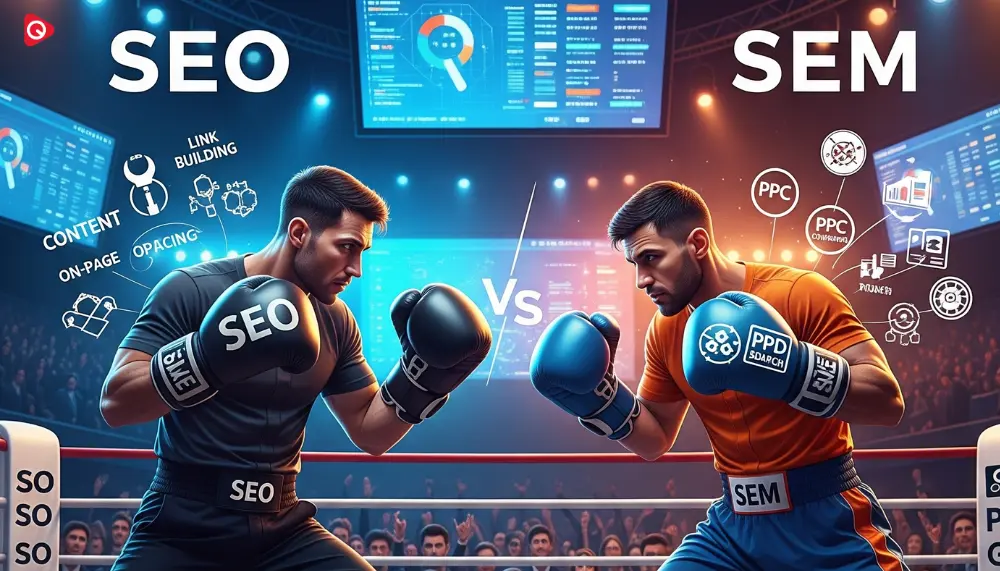
For any startup, achieving visibility on search engines like Google is not just a marketing goal—it’s a lifeline. When potential customers search for solutions you provide, you need to be there. The two primary paths to achieving this visibility are Search Engine Optimization (SEO) and Search Engine Marketing (SEM). However, the terms are often used interchangeably, leading to confusion that can result in misguided strategies and wasted budgets.
Understanding the fundamental differences between SEO and SEM is one of the most critical strategic decisions a small business can make. It dictates how you allocate your resources, how quickly you can expect to see results, and the long-term sustainability of your online presence. This guide will demystify the SEO vs. SEM debate, provide a clear comparison, and help you decide which approach—or combination of both—is right for your startup.
Acknowledging the Confusion: Defining Our Terms
First, let’s clear up the terminology. Historically, SEM was a broad umbrella term that included both paid and organic search activities. In this view, SEO is simply a component of SEM. However, in modern marketing parlance, SEM is most often used to refer specifically to paid search advertising, such as Pay-Per-Click (PPC).
For the sake of clarity in this guide, we will use the common modern definitions:
- SEO: The practice of optimizing your website to earn traffic from organic (unpaid) search results.
- SEM: The practice of gaining traffic and visibility through paid advertising on search engines.
What is SEO? The Marathon for Sustainable Growth
SEO is the process of making your website more attractive to search engines to rank higher in the organic results. When you rank organically, every click is “free,” but earning that spot is a long-term investment in building trust and authority.[6] SEO is typically broken down into four key areas:
On-Page SEO: Optimizing the content and structure of your individual web pages. This includes strategic keyword research, crafting compelling title tags and meta descriptions, and using header tags to structure your content logically.
Off-Page SEO: Building your website’s authority and trustworthiness through external signals. The most important off-page factor is acquiring high-quality backlinks from other reputable websites.
Technical SEO: Ensuring your website’s backend is structured in a way that search engines can efficiently crawl and index it. This includes factors like site speed, mobile-friendliness, and having a clean site architecture.
User Interaction Signals: How users engage with your site. Metrics like a low bounce rate (users not leaving immediately) signal to Google that your page is a good match for a search query.
What is SEM? The Sprint for Immediate Visibility
SEM, or paid search, allows you to bypass the long wait of SEO by paying for your website to appear in the sponsored sections of the search results page. The most common model is Pay-Per-Click (PPC), where you bid on keywords and pay a fee each time someone clicks your ad.
Key components of SEM include:
Bidding: You compete with other advertisers in a real-time auction to have your ad displayed for specific keywords.
Keyword Research: Similar to SEO, but with a focus on high-intent keywords that signal a user is ready to make a purchase.
Ad Copy: Crafting compelling headlines and descriptions that entice users to click.
Quality Score: A metric Google uses to rate the relevance and quality of your ads, keywords, and landing pages. A higher Quality Score can lead to lower costs and better ad positions.
SEO vs. SEM: A Head-to-Head Comparison
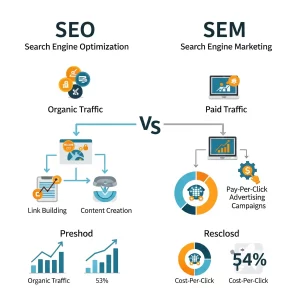 The best way to understand the difference is to compare them across key business criteria.
| Feature | SEO (Organic Search) | SEM (Paid Search / PPC) |
| Speed to Results | Slow. It can take 6-12 months to see significant, sustainable results. | Fast. You can start driving traffic almost immediately after launching a campaign. |
| Cost | No direct cost per click. However, it requires a significant investment in resources (content creation, technical expertise, link building). | Direct cost per click. You pay for every visitor. Can be expensive, but budget is controllable. |
| Longevity of Results | High. Once you achieve a high ranking, you can enjoy sustainable, passive traffic for a long time with ongoing maintenance. | Low. The moment you stop paying for ads, your traffic and visibility disappear completely. |
| Level of Control | Low. You are subject to algorithm updates and have no direct control over your ranking position. | High. You have precise control over keywords, ad copy, landing pages, and audience targeting. |
| Audience Trust | High. Users tend to trust organic results more than paid ads, leading to potentially higher click-through rates. | Lower. Users know they are clicking on an advertisement, which can sometimes lead to skepticism. |
The Power of Synergy: How SEO and SEM Work Together
The most powerful approach for many businesses is not to choose one over the other, but to use them in tandem.
Use PPC Data to Fuel SEO: SEM campaigns provide immediate data on which keywords convert best. You can use this intelligence to prioritize your long-term SEO efforts, focusing on the keywords you know will drive revenue.
Dominate the SERP: By running paid ads while also ranking organically, you can occupy multiple spots on the first page, pushing competitors down and maximizing your brand’s visibility.
Cover All Bases: Use SEO to target high-volume, informational keywords with content, and use SEM to target high-intent, commercial keywords for immediate conversions.
Which is Right for Your Startup?
Focus on SEO if: You have a limited budget, are in a niche where you can build authority with content (targeting informational keywords), and have the patience to play the long game.
Focus on SEM if: You need immediate results (e.g., for a product launch), have a dedicated advertising budget, and want to test different value propositions and landing pages quickly.
Use Both if: You have the resources to manage both campaigns effectively. Start with SEM for quick wins and data gathering, while simultaneously investing in a long-term SEO strategy for sustainable growth.
Ultimately, the SEO vs. SEM decision is a core part of your overall Marketing for Startups strategy. By understanding the unique strengths of each, you can build a comprehensive search marketing plan that delivers both immediate impact and lasting value.
we invite you to get a free consultation and let us be your partner in success.