Growth Hacking for Startups: 10 Strategies for Rapid, Sustainable Growth in 2025
For startups, “growth” isn’t just a goal; it’s the oxygen that fuels survival and success. In this high-stakes environment, traditional marketing playbooks can feel too slow and too expensive. This is where growth hacking comes in—a discipline born from the need for rapid, scalable growth on a lean budget. It’s a mindset focused on creativity, analytical thinking, and a relentless drive to acquire and retain customers.
But let’s be clear: growth hacking has evolved. The term, first coined by Sean Ellis in 2010, was once associated with clever, one-off “hacks” that could go viral overnight. While those stories are inspiring, today’s most successful startups understand that true growth isn’t about finding a single silver bullet. It’s about building a sustainable, data-driven engine for growth. This guide will walk you through the modern framework for growth hacking and provide ten actionable strategies you can implement to build momentum and achieve lasting success.
 The Growth Hacking Mindset: Understanding the AARRR Funnel
 The Growth Hacking Mindset: Understanding the AARRR Funnel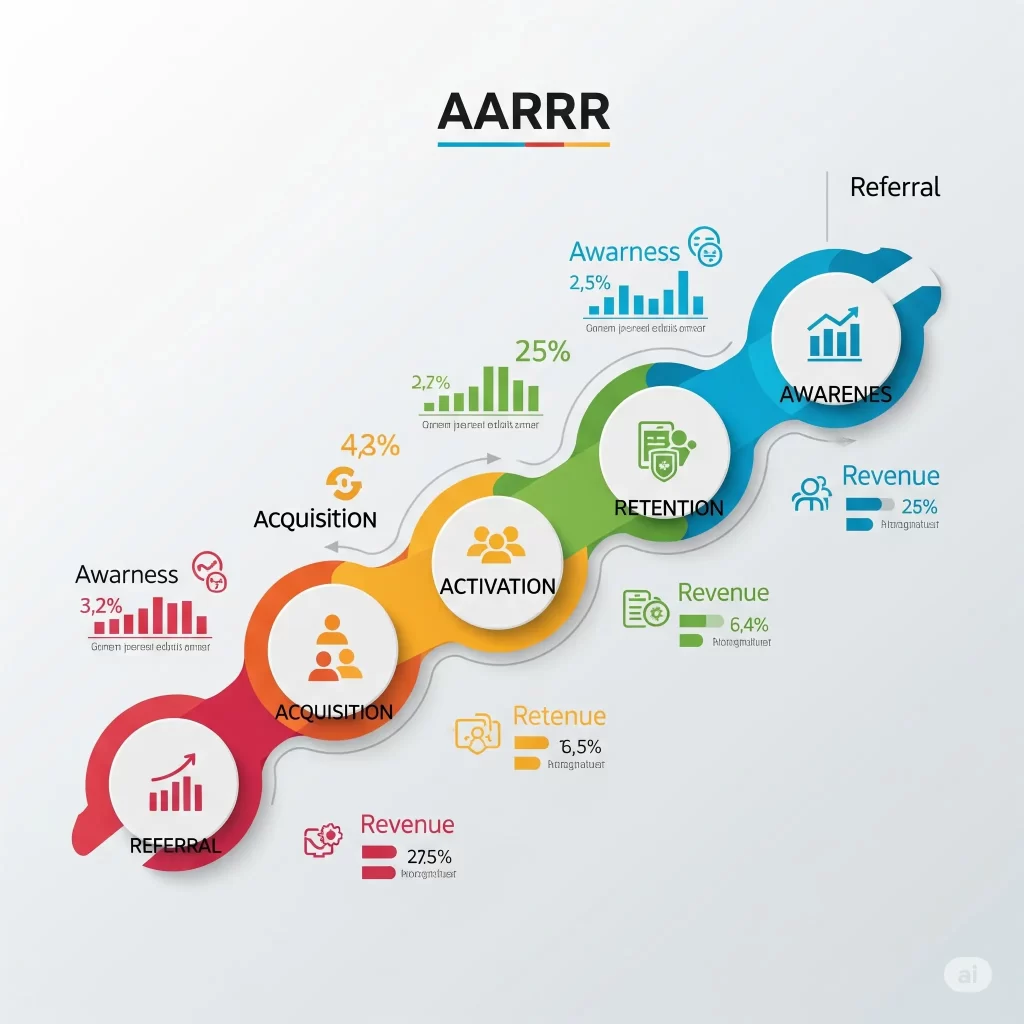
At the heart of growth hacking is the AARRR funnel, a framework that breaks the customer lifecycle into five distinct, measurable stages. This model allows you to identify your biggest opportunities and bottlenecks with precision.
Acquisition: How do users find you? This is the top of your funnel, covering all the channels that bring new visitors to your doorstep, from SEO and social media to paid ads.
Activation: How do you provide a “happy” first experience? This stage is about getting new users to take a key action that demonstrates the value of your product, like completing a profile, creating their first project, or using a core feature.
Retention: Do users come back? Keeping customers is often cheaper than acquiring new ones. This stage focuses on strategies to reduce churn and keep users engaged over the long term.
Revenue: How do you make money? This is the monetization stage, where you focus on converting active users into paying customers.
Referral: Do users tell others about you? This is the holy grail of growth—turning your existing customers into a powerful acquisition channel through word-of-mouth and referral programs.
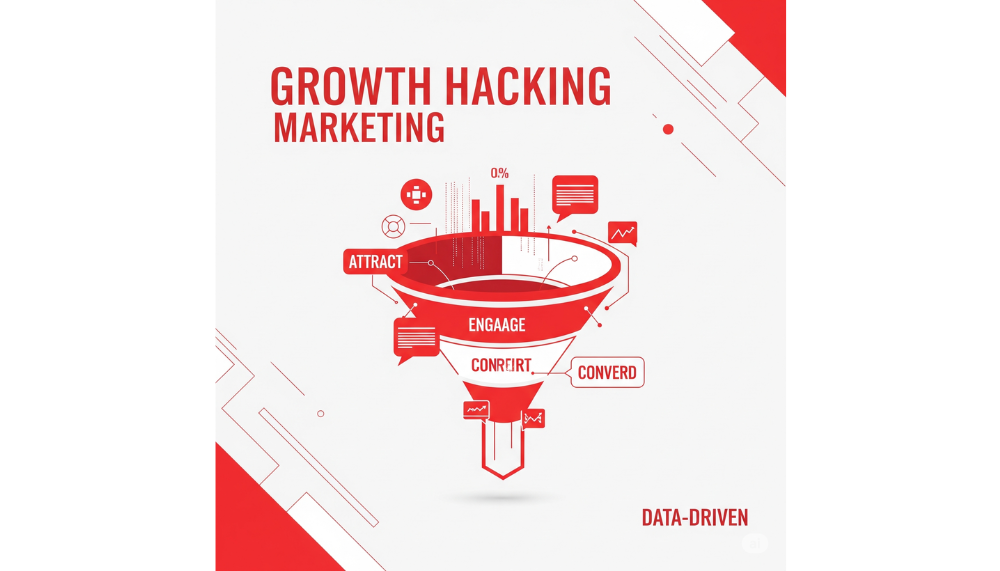
A true growth hacker analyzes each stage of this funnel, constantly running experiments to improve the conversion rate from one stage to the next.
10 Actionable Growth Hacking Strategies for Startups
With the AARRR funnel as our guide, let’s explore ten powerful strategies to fuel your startup’s growth.
Build a Pre-Launch Email List
The most successful product launches don’t start on launch day. They begin months earlier by building anticipation and a captive audience. Before your product is even ready, create a simple landing page that explains your value proposition and includes a form to collect email addresses. Drive traffic to this page through social media, guest posts, or online communities. This gives you a warm list of potential first customers to notify the moment you go live, creating crucial initial momentum.
Implement a Powerful Referral Program
Referral marketing turns your existing customers into your most effective sales team. Dropbox famously mastered this by offering free storage space to both the referrer and the new user. The key is to offer a compelling, dual-sided incentive that rewards both parties. Make the referral process seamless within your product and track everything to see which customers are your biggest advocates.
Engineer Virality with Viral Loops
A viral loop is a process where users naturally invite other users as part of their normal product experience. Think of a collaboration tool where a user invites their team to a project, or an event platform where an attendee shares the event with friends. By designing your product to encourage this kind of sharing, you create a self-sustaining growth engine where each new user has the potential to bring in several more.
Use Content Marketing as a Growth Engine
Content marketing is a cornerstone of modern growth hacking. By creating valuable, problem-solving content like blog posts, videos, and guides, you can attract your target audience through organic search and establish your brand as an industry authority. Focus on creating high-quality content that addresses your customers’ biggest pain points at each stage of their journey.
Deploy Smart SEO Growth Hacks
SEO is a long-term game, but certain tactics can accelerate results. Focus on low-competition, long-tail keywords—highly specific phrases that your target audience uses when they are close to making a decision. For local businesses, optimizing your Google Business Profile and targeting local keywords (e.g., “best coffee shop in Muscat”) is one of the fastest ways to get on the first page of Google for relevant searches.
Leverage User-Generated Content (UGC)
Encourage your customers to create and share content featuring your product. This could be through a branded hashtag contest on Instagram, a photo-sharing campaign, or simply by showcasing positive customer reviews on your website. UGC acts as powerful social proof, building trust and authenticity in a way that branded content never can.
Offer Freemium Models or Time-Limited Promotions
A freemium model, where you offer a basic version of your product for free, is a classic growth hack for lowering the barrier to entry and getting users to the “Activation” stage. Once they see the value, you can upsell them to a paid plan. Alternatively, creating a sense of urgency with time-limited discounts or exclusive offers can be a powerful motivator to drive immediate action.
Partner with Micro-Influencers
You don’t need a massive budget to do influencer marketing. Partnering with micro-influencers (those with smaller, highly engaged niche audiences) can often deliver a better return on investment. Find influencers who genuinely align with your brand and whose followers match your target demographic. Authenticity is key.
Build an Engaged Community
Don’t just broadcast on social media; build a community. Create a Facebook Group or a Slack channel where your most passionate users can connect with each other and your team. This fosters loyalty, provides invaluable product feedback, and turns customers into brand advocates.
A/B Test Relentlessly
Data is a growth hacker’s best friend. Continuously run A/B tests on every aspect of your marketing funnel—from your landing page headlines and call-to-action buttons to your email subject lines and ad copy. Small, incremental improvements can lead to massive gains in growth over time.
Essential Growth Hacking Tools
To execute these strategies effectively, you’ll need the right toolkit. Here are a few essentials:
Analytics: Google Analytics is the free, industry-standard tool for understanding user behavior on your site.
Email Marketing: Services like Constant Contact or Mailchimp are perfect for building your email list and sending targeted campaigns.
SEO: Tools like Ahrefs or Semrush are indispensable for keyword research, competitor analysis, and tracking your rankings.
A/B Testing: Platforms like Optimizely or VWO allow you to easily test different versions of your web pages to see what converts best.
Conclusion: From Hacks to Habits
Growth hacking is more than a collection of tactics; it’s a disciplined, scientific approach to marketing. By focusing on the entire AARRR funnel, leveraging data, and constantly experimenting, startups can build a powerful and sustainable engine for growth. The most successful companies integrate this mindset into their culture, making growth a shared responsibility across the entire organization.
This deep dive into growth hacking is a crucial part of a broader Marketing for Startups strategy. By combining these agile tactics with foundational marketing principles, you can build a brand that not only grows quickly but also endures.
we invite you to get a free consultation and let us be your partner in success.